
Internet Society Nepal Chapter (ISOC Nepal)
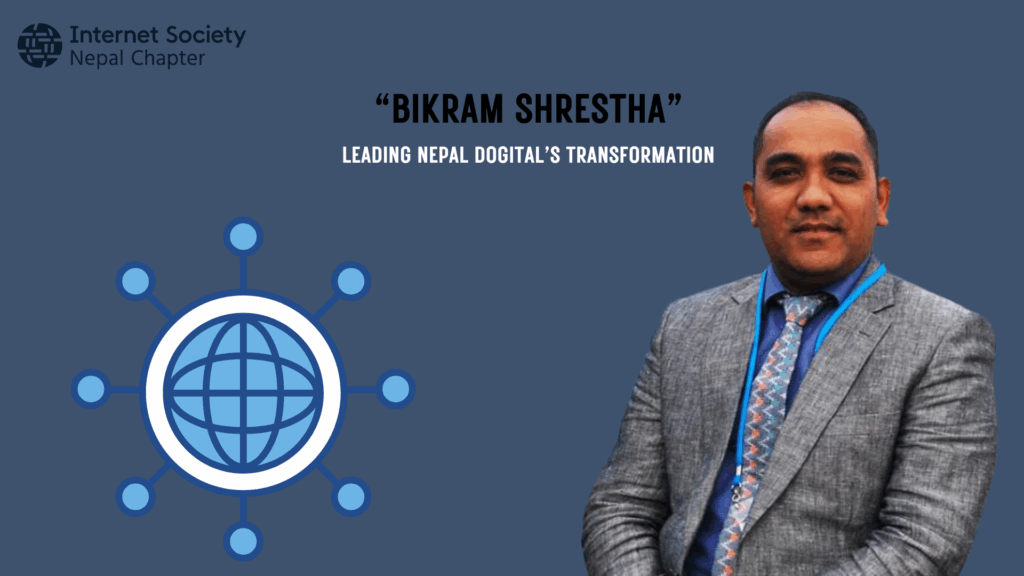
When Bikram Shrestha founded the Internet Society Nepal Chapter, he did not set out to build an organization. He set out to build a movement. A movement rooted in the belief that the internet, at its best, is not a product or a platform but a public good — one that belongs to every Nepali, from the technology professional in Kathmandu to the first-time user in a mountain village far from any city.
The Internet Society (ISOC) is one of the world’s most respected organizations advancing an open, globally connected, secure, and trustworthy internet. Its chapters around the world carry that mission into local communities, translating global principles into local action. In Nepal, that work has been shaped in profound ways by Bikram’s vision, energy, and commitment.
As Founder and Past President of the Internet Society Nepal Chapter, Bikram spent years building ISOC Nepal into something far more than an advocacy organization. He built it into a living community a space where government representatives, business leaders, technical experts, civil society activists, researchers, and everyday internet users could come together around a shared purpose: ensuring that the internet in Nepal is open, secure, inclusive, and genuinely useful for everyone.
More than 25 years of work in internet development and digital finance have given Bikram a perspective that is both broad and deeply grounded. He understands internet policy at the global level, having represented Nepal at ICANN and APNIC. He understands digital finance at the institutional level, having led digital banking transformation at Sanima Bank for over a decade. And he understands community at the human level, having grown up in Hetauda and spent his career watching what connectivity actually means for people whose lives are changed by it. It is that combination of perspective that he brought to ISOC Nepal and that continues to shape the chapter’s work today.
Under Bikram’s leadership, ISOC Nepal grew from a nascent chapter into a dynamic and respected forum in Nepal’s internet governance landscape. He did not simply hold events or publish statements. He built relationships, created structures, and established a culture of open and multistakeholder engagement that has outlasted his formal tenure as president.
The chapter became known for bringing together people who do not always share the same interests or speak the same technical language and creating productive conversations between them anyway. That is harder than it sounds. Internet governance in many countries tends to be dominated by either the technical community or the government, with civil society and the private sector playing secondary roles. Bikram worked deliberately against that tendency. He ensured that ISOC Nepal’s processes were genuinely participatory and that the chapter’s positions on national internet policy reflected a broad cross-section of stakeholder perspectives.
He also understood from early on that an internet society chapter must be embedded in the communities it serves, not just in the rooms where policy is made. That conviction drove him to pursue capacity building programs, grassroots digital literacy initiatives, and community empowerment projects alongside the policy and advocacy work that tends to receive more attention. Both dimensions of the work the high-level and the grassroots — were, in his view, essential and inseparable.
Since stepping down from the presidency, Bikram has remained deeply connected to ISOC Nepal’s mission. He serves as a mentor and trusted advisor to the chapter’s current and emerging leaders, sharing two and a half decades of institutional knowledge, policy experience, and strategic perspective to ensure that the chapter continues to grow, evolve, and serve its community with integrity.
One of Bikram’s most enduring contributions through ISOC Nepal has been his leadership in establishing and sustaining Nepal’s National Internet Governance Forum. The National IGF is an annual multistakeholder gathering modeled on the global IGF — a forum created under the United Nations framework to enable open, inclusive dialogue on the full range of issues that shape the internet’s development and governance.
Since 2019, Bikram has led ISOC Nepal in hosting the National IGF every year, and the forum has grown in significance, reach, and quality of engagement with each edition. It has become one of the most important gatherings in Nepal’s internet policy calendar — a space where decisions that affect how millions of Nepali people experience the internet are discussed, debated, and shaped through genuine multistakeholder participation.
The 2021 National IGF stands out as a particularly significant chapter in that story. Held virtually in response to the COVID-19 pandemic, the forum brought together more than 500 participants from across Nepal and beyond — an extraordinary turnout that reflected both the growing relevance of the forum and the hunger within Nepal’s internet community for exactly this kind of open, structured, and inclusive dialogue.
The 2021 forum featured a rich programme of panel discussions, workshops, and interactive sessions covering a wide range of digital policy issues. One of the themes Bikram pushed most strongly was internet safety for small businesses. This was not an abstract policy concern for him. Nepal’s e-commerce sector was growing rapidly, and small business owners across the country were moving their operations online — often without the digital literacy or security awareness to protect themselves effectively. By bringing that issue to the center of the 2021 forum, Bikram helped ensure that the cybersecurity conversation in Nepal included the people most vulnerable to its consequences and gave them practical tools and knowledge to protect their businesses and their livelihoods.
Policy forums and governance discussions are essential. But Bikram has always known that the most meaningful work often happens not in conference rooms but in communities — with people who are not yet part of the internet conversation but whose lives would be transformed by joining it.
That conviction led him to champion ISOC’s Beyond the Net program as a vehicle for community-level digital empowerment in Nepal. Beyond the Net is an ISOC initiative that provides funding and support for grassroots projects that use internet access and digital skills to address real community challenges. Bikram guided and supported multiple initiatives under this program, consistently orienting them toward the communities with the least access and the most to gain.
The most compelling example of this work came in 2022, in the rural Kavrepalanchok district. There, ISOC Nepal trained more than 300 women entrepreneurs in digital literacy equipping them with the skills and confidence to use online platforms for their businesses, manage their finances digitally, and reach customers beyond their immediate communities.
What made this program exceptional was not just its scale but its design. Training materials were developed in local languages and adapted to the cultural context of the participants. The program was not simply transplanting a digital literacy curriculum from an urban setting into a rural one. It was built from the ground up to meet participants where they were to be relevant, accessible, and genuinely useful for the lives they were actually living.
The results were real and lasting. Women who completed the program began using digital platforms to market their goods, handle financial transactions, and connect with customers they could never have reached before. For many participants, the training opened up not just new business opportunities but a new sense of independence and confidence in navigating the digital world. That kind of change concrete, personal, and durable — is what Bikram has always believed the internet, at its best, can deliver.
Bikram’s work with ISOC Nepal has never been confined to events and programs. He has consistently sought to translate the community’s experiences and perspectives into national policy to ensure that the frameworks governing Nepal’s internet reflect the realities of the people living within them.
In 2023, this commitment came through clearly in his active support for ISOC Nepal’s contributions to Nepal’s national cybersecurity policy process. Nepal’s digital landscape was evolving rapidly. Cyberbullying, phishing, online fraud, and other digital threats were becoming increasingly common and the communities most vulnerable to these threats were often those with the least awareness and the fewest resources to protect themselves.
Bikram brought ISOC Nepal’s community experience directly into the policy conversation. He drew on the chapter’s SecureFamily campaign an initiative designed to help families and individuals navigate the internet safely as evidence of what community-based security education can achieve. His advocacy made the case that effective cybersecurity policy in Nepal must combine technical measures with education, awareness, and accessible support for ordinary internet users.
As a result of this sustained advocacy, the national cybersecurity policy framework that emerged placed meaningful emphasis on education and awareness alongside its technical provisions. The voices of regular internet users parents worried about online safety, small business owners facing phishing threats, rural communities just beginning to come online were reflected in a national policy document. That is a direct outcome of the work Bikram did to ensure that ISOC Nepal’s engagement with the policy process was rooted in real community experience rather than abstract technical positioning.
Throughout his tenure with ISOC Nepal and in everything that has followed, Bikram Shrestha has demonstrated a consistent and deeply held philosophy about what the internet is for and who it should serve.
He believes the internet is not an end in itself. It is a means a means of connection, of opportunity, of cultural expression, of economic empowerment, of community. The measure of success in internet governance and digital development is not bandwidth or domain registrations or policy documents. It is whether the people who need the internet most are actually able to use it, benefit from it, and feel that it belongs to them.
That belief shapes how he leads meetings, how he designs programs, how he engages with policymakers, and how he mentors the next generation of digital leaders in Nepal. He brings patience to conversations that others find frustrating, inclusivity to processes that others allow to become exclusive, and a steady focus on human impact to work that can easily become abstracted into technical or bureaucratic language.
He has also modeled something important about leadership itself. By stepping back from the presidency while remaining engaged as a mentor and advisor, he has demonstrated that genuine leaders build institutions and people that can flourish without them. ISOC Nepal is stronger today not just because of what he built while leading it but because of the culture, the relationships, and the next generation of leaders he cultivated along the way.
“Bikram’s story provides an example of how vision, commitment, and empathy can transform ideas into significant change paving the way for people and communities to prosper in the digital era.”
Key Contributions Through ISOC Nepal
Founding and Institutional Leadership
Founder and Past President of the Internet Society Nepal Chapter (ISOC Nepal)
Transformed ISOC Nepal into a respected multistakeholder forum for Nepal’s internet governance community
Currently serves as mentor and advisor to ISOC Nepal’s current and emerging leadership
National Internet Governance Forum
Led ISOC Nepal in hosting the National Internet Governance Forum annually since 2019
Grew the National IGF into one of Nepal’s most significant internet policy gatherings
Chaired the 2021 National IGF, held virtually with more than 500 participants, with a focused agenda on cybersecurity for small businesses and e-commerce
Community Empowerment and Digital Literacy
Guided and supported multiple projects under ISOC’s Beyond the Net initiative
Led the 2022 digital literacy program in Kavrepalanchok district, training more than 300 women entrepreneurs in local languages and culturally relevant formats
Supported digital empowerment initiatives that have created measurable economic and social impact for underserved communities across Nepal
National Policy Advocacy
Actively contributed to the development of Nepal’s national cybersecurity policy in 2023
Advocated for policy frameworks that prioritize community-based education and awareness alongside technical security measures
Drew on ISOC Nepal’s SecureFamily campaign to demonstrate the real-world value of community-centered approaches to internet safety
Bikram Shrestha’s journey with ISOC Nepal is a story about what happens when someone who deeply understands the internet also deeply understands people. It is a story about building not just websites and networks and policy documents, but communities, relationships, and the kind of shared purpose that makes lasting change possible.
Nepal’s internet landscape is more open, more secure, more inclusive, and more reflective of its own communities because of the work he did through ISOC Nepal. The leaders he mentored are carrying that work forward. The women in Kavrepalanchok who learned to run their businesses online are living that work every day. The policies shaped by ISOC Nepal’s advocacy are protecting people who never attended a governance forum and never will.