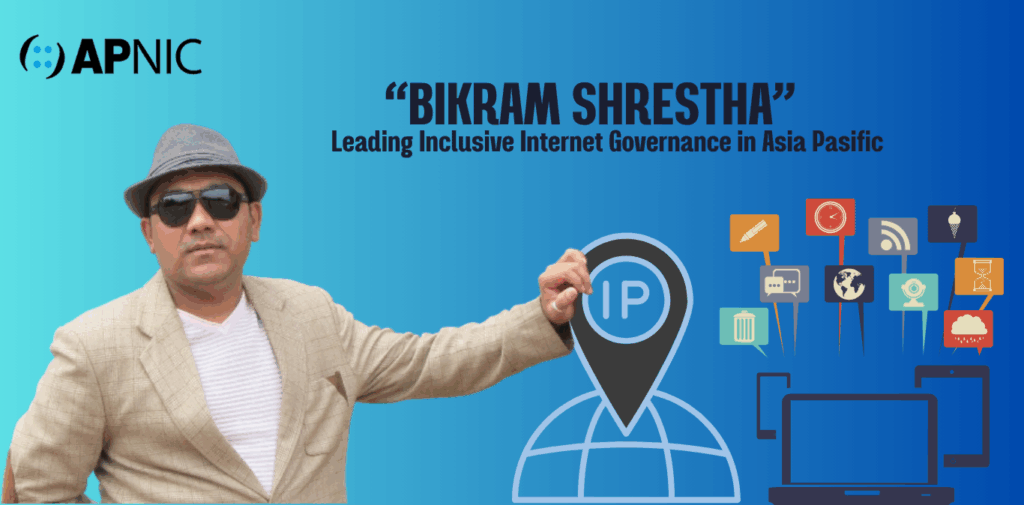
Since becoming Co-Chair for APNIC’s Cooperation Special Interest Group (SIG) in February 2020, Bikram Shrestha has earned a strong reputation in the Asia-Pacific online community. His leadership is built on empathy, open communication, and the belief that progress happens when governments, technical experts, civil society, and the private sector work together.
Bikram took on the role during a time of rapid digital change. Instead of being overwhelmed, he embraced the challenge, guiding the Cooperation SIG with a human-centered approach that values inclusivity, dialogue, and consensus. He has brought people with different views to the table, strengthened regional cooperation, empowered emerging leaders, and helped the Asia-Pacific remain a global example of responsible and fair internet growth.
He helps establish the Cooperation SIG’s agenda and make sure that talks take into account the changing needs of the area by offering strategic direction in this leadership role. His roles include organizing and facilitating SIG meetings, keeping an eye on ongoing discussions, and making sure that the opinions of all parties involved including governments, the commercial sector, civil society, and technical experts are respected and heard. He has a strong cBringing Many Voices Together
As Co-Chair, Bikram helps shape the Cooperation SIG’s agenda so it reflects the changing needs of the region. He organizes and facilitates meetings, oversees ongoing discussions, and ensures that everyone, whether a policymaker, engineer, entrepreneur, or community representative, feels heard and respected.
He knows that the best solutions come from listening to different perspectives. That is why openness, transparency, and consensus are at the heart of his work. Under his guidance, the SIG has become a place where collaboration can thrive even when addressing complex internet governance issues.
Driving Policy Reform Through Dialogue
One of Bikram’s key contributions was at APNIC 58 in Wellington, New Zealand, in September 2024. There, he co-led an important Cooperation SIG session on updating the Internet Coordination Policy 2 (ICP-2). For more than 25 years, ICP-2 had guided the approval of new Regional Internet Registries (RIRs). However, as the internet evolved and new challenges emerged, the need for a modernized approach became clear.
Bikram led discussions on how to update ICP-2 to address privacy concerns, cybersecurity threats, and the need for stronger technical capabilities. He made sure the process was open to all, regardless of age, location, or technical experience. He also brought together experienced internet leaders and new voices, encouraging true community-driven policy making.
To keep the process inclusive, he supported the NRO’s ICP-2 survey, calling for more participation and helping to ensure underrepresented communities could share their views. These efforts have helped prepare the ground for a policy that meets the needs of today’s internet environment.
Championing Digital Equality
Bikram’s commitment to inclusion is also seen in his work with developing nations in the Asia-Pacific. In 2021, he led a Universal Acceptance (UA) readiness training program to help prepare the next generation of developers and digital leaders in Nepal and other South Asian countries.
Understanding that language can be a barrier, he designed the training to help participants adapt to internationalized email systems and domain names, an important step toward making the internet available to everyone. The program went beyond technical training. It gave participants a sense of pride and ownership in shaping their local digital future.
Through hands-on workshops, hacking competitions, and real-world deployment tests, young developers learned to configure domain names in local scripts and set up globalized email systems. The results were clear. Nepal’s first native-language domain website was launched as a direct outcome of this program, and many participants have gone on to promote digital inclusion in their own communities.
Building Regional Connections
Bikram has also focused on strengthening relationships with stakeholders and encouraging collaboration across the region. By supporting APNIC’s mission to advance innovation, multistakeholder partnerships, and universal access, he has helped Asia-Pacific maintain its leadership in fair and forward-looking internet governance. His leadership has created new opportunities for cooperation, influenced policy, and given emerging leaders the chance to shape the future of the internet.
Looking Ahead
At the core of Bikram’s work is a belief that the internet should be a positive force that connects people, supports communities, and drives development. Whether he is leading a policy discussion, mentoring young innovators, or encouraging broader participation in governance, he brings vision, compassion, and dedication to everything he does.
His efforts are not only advancing APNIC’s goals but are also leaving a lasting impact on the Asia-Pacific’s journey toward a more equal and inclusive digital world.